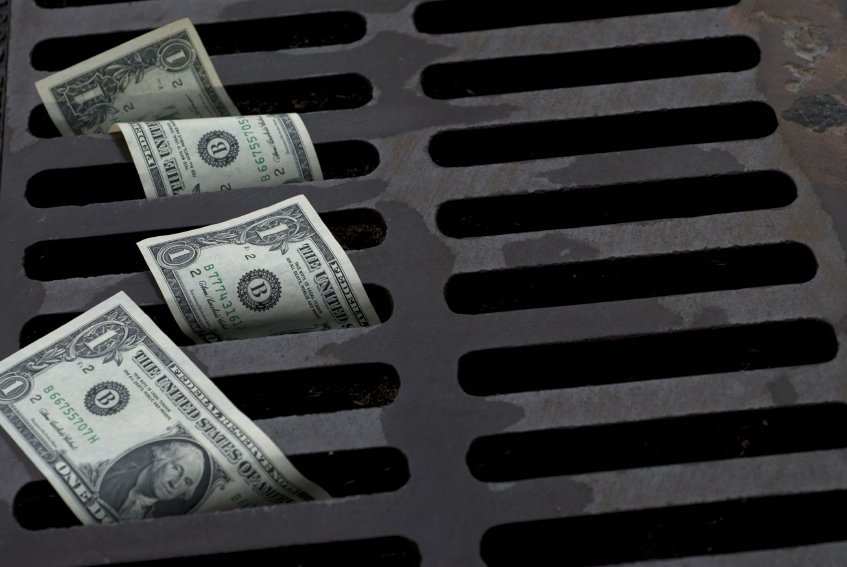
During his tenure as O2 Ireland’s Commercial Director, Brian D’Arcy (BD) had a mission to reduce the amount of loss which the operator created. He achieved this goal, and was able to save the operator €2.5 million of revenue which otherwise would have been “money down the drain.”
Now Brian has joined Anam Technologies, a leading revenue assurance provider for mobile operators, and has been unshackled to speak to TelecomsTech (TT) about how he helped to plug a hole which is estimated to cost the industry around $8 billion per year in preventable loss.
TT: How did you save Telefónica O2 over €2.5 million in revenue?
BD: This was achieved through the billing of 90 million messages which we just didn’t see before. We went from billing virtually nothing on A2P (Application-to-Person) traffic, to billing close to €2.5 million a year. Businesses were sending consumers traffic, but because of SS7 – where operators send traffic to one another without charge – it just wasn’t being billed.
Plugging this hole had a big revenue impact, and it even had a benefit for our customers. If you take our consumer customers first – when SMS is virtually free through A2P – what happens is that consumers are inclined to be spammed more.
Of the four large telcos in Ireland, the only operator which is locked down or filtered is O2.
When companies want to send out tens of thousands of messages; the cost is negligible via A2P so they’ll do it that way. People will also send out messages which say “call this number” and it happens to be a premium rate number. You end up with a lot of spam, and a lot of fraud.
On the other side, what’s happening with businesses is that they are trying to use SMS as an operational tool for communication within their company. They want to use it to engage with customers for things like; PIN authorisations, offers, order confirmations, notifications of deliveries…
What happens with this traffic is – because they are looking for the least cost route – the quality can be poor. The delivery percentage can be small, which means these businesses might think these messages are being delivered when in actual fact they’re not.
The big and well-established aggregators didn’t like the whole A2P scenario either. If they are trying to work out a quote for some of the big players; it can become a bit of a nightmare. It’s not a level playing-field, you don’t have a wholesale price, and as a result you have a fluctuating retail price.
What we experienced is that we started to win some business from our competitors. Customers would come to us and say, “We know you have a filtered solution in terms of grey routes, and we know as an operator your network interconnects with all the other operators. If we deliver it to you, we can be sure that traffic will be delivered.”
It was a win-win for everyone involved, and Telefónica made a lot of revenue on a product which already existed. The results were almost immediate, and A2P is growing at a rate of around 20 – 30% year-on-year. In fact, a Juniper [Research] statement said that A2P messaging will surpass P2P revenue by early-2015.
TT: You’ve achieved incredible results through plugging the A2P “Grey Route” hole with O2, but are other operators following the example?
BD: At the moment, of the four large telcos in Ireland, the only operator which is locked down or filtered is Telefónica O2. All the others are wide-open. I’ve done research now on a number of countries which are also open; with no filtering at all.
We went from billing virtually nothing on A2P traffic, to billing close to €2.5 million a year.
What can also happen is operators look at A2P and they think they can do some manual filtering. In a way it is a bit of an illusion because it’s like manually trying to put up a firewall to stop someone hacking into your laptop – the game keeps changing and new threats keep getting through. You need a fully-automated solution.
Some operators would claim to do it, but they would do it with an ad-hoc approach. It’s like a sieve, if there are holes in it then the water will find the easiest route through. You either have it fully-secure, and fully-managed, or you don’t do it at all. My view is that about 75% of operators globally don’t do effective grey route blocking.
TT: Moving onto revenue opportunities, O2 is now the only operator without HD Voice. How important do you think network innovations are as to whether the average consumer becomes a subscriber?
BD: For just the guy in the street with a phone, I think it’s about price and then quality. People aren’t prepared to pay a premium price just to be associated with a premium brand anymore, it’s basically “What can I get my mobile phone connectivity for?”
But there is an expectation that the service will be good, and if it’s not then consumers will hammer the operator. It’s an interesting journey as we go into 4G because people will expect so much more, but the danger is that people are expecting more and paying less.
There are so many OTT (Over-the-Top) services coming out which expect to get connectivity for free, and the economics of it are that just isn’t possible…
TT: What about the predicted 50 billion connected devices by 2020? Do you see those as being a big driver of mobile operator revenue in the future?
BD: At the moment, it’s interesting to look at that growth because telecommunications experts say there are around 6.8 billion devices registered to people internationally. When you move up to 50 billion I think that will drive operator revenue. It’s a new opportunity for revenue, and operators are always looking for new opportunities.
What do you think about Brian’s insights regarding A2P? Let us know in the comments.