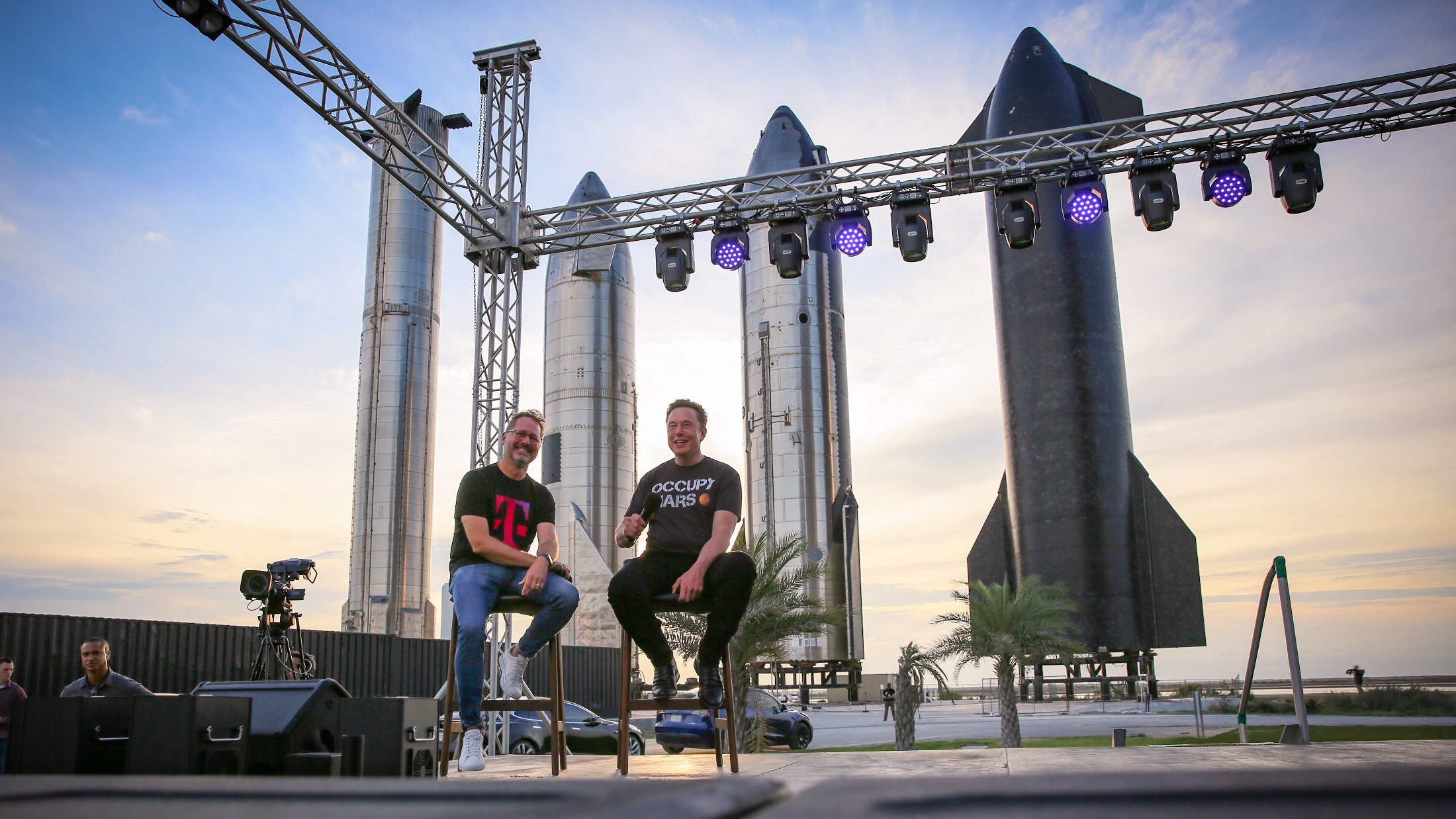
SpaceX is partnering with T-Mobile on an ambitious plan to offer “satellite-to-cellular” service.
Connectivity will be provided by SpaceX’s second-generation Starlink satellites in combination with T-Mobile’s mid-band 5G spectrum.
T-Mobile says the “vast majority” of existing smartphones will be compatible with the new service. If all goes to plan, customers should expect “near complete coverage” across the US, including territorial waters.
“Our vision is: if you have a clear view of the sky, you’re connected,” said T-Mobile US CEO Mike Sievert at a live event at SpaceX’s Starbase facility in South Texas.
Starlink’s second-generation satellites are much larger than the existing fleet. They will pack a more powerful phased array antenna, enabling them to connect with devices as small as mobile phones instead of requiring a large base station.
“These are the most advanced antennas in the world,” explained SpaceX CEO Elon Musk.
“They have to pick up a very quiet signal from your cell phone. Just imagine, that signal has to travel 500 miles and then be caught by a satellite that’s travelling at 17,000 mph. The satellite has got to compensate for the Doppler effect of moving so fast.”
Musk acknowledges that there are still technical challenges to overcome but that SpaceX teams are making great progress.
“We have it working in the lab and we’re confident this will work in the field,” said Musk. “So it’s actually quite a lot of extra hardware on the satellites and it’s also a lot of software. It’s a hard problem.”
Beyond overcoming the technical challenges, SpaceX and T-Mobile will also need to get regulatory approvals to operate the new service.
The partners are currently aiming to launch the service in beta in late 2023. Initially, it will only work with SMS, MMS, and “participating messaging apps”. Full voice and data coverage are planned for later down the line.
“More than just a groundbreaking alliance, this represents two industry-shaking innovators challenging the old ways of doing things to create something entirely new that will further connect customers and scare competitors,” said Sievert.

Looking to revamp your digital transformation strategy? Learn more about Digital Transformation Week taking place in Amsterdam, California, and London, and discover key strategies for making your digital efforts a success.