(c)iStock.com/claudiodivizia
MWC The recent tussle for the English Premier League football rights was shrouded in mystery and intrigue. Will this be the season where the purely-digital disrupters, the Amazons, the Facebooks et al, finally get a piece of the pie?
In a couple of words – not really. Sky and BT Sport again secured the main packages for £4.464 billion for matches from 2019 to 2022 – two smaller rights packages remain unresolved – with BT adding in a statement that it remained ‘financially disciplined’ during the process and that it ‘remains in a strong position to make a return on this investment through subscription, wholesale, commercial and advertising revenues’. The company added its acquisition of EE would be particularly helpful in this ambition.
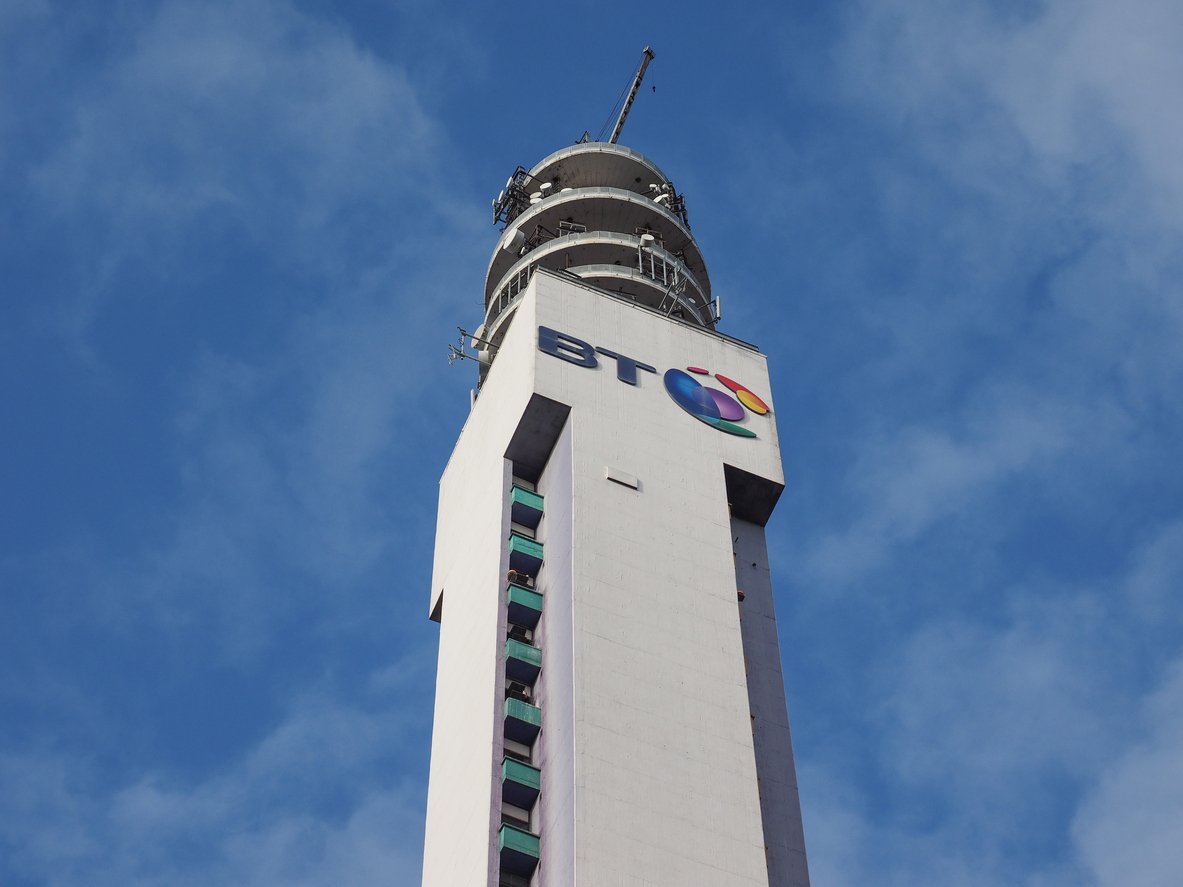
So what does this mean for BT’s content play? In an intriguing keynote session at Mobile World Congress, Gavin Patterson, BT Group CEO, gave his opinion on sports rights, emerging technologies, Netflix and more.
BT’s strategy is certainly an interesting one. For content, the company is happy to shell out for certain aspects and be a ‘super-aggregator’ for others. Janice Hughes, co-founder and director at Redshift Strategy, an analyst firm dedicated to technology, media and telecom (TMT) as well as sport, opened the session by declaring that “for the thrills and spills of high end drama, consumers are collectively turning in droves to the OTT platforms.” Describing it as a ‘radical’ shift in consumer behaviour, Hughes added that fixed and mobile operators can “tap into new revenues… and offer compelling dramas and sports on their iPads with the right OTT content strategy and partners.”
Here’s the rub, of course: BT traverses both categories. Patterson was at pains to point out the company did have a mobile arm back in the 1990s – IPO’d with more than one eye on the balance sheet – but that it was always looking to move back there, and away from being a pure-play fixed operator. Hence EE. “It was a great business when we acquired it, and it’s turned out to be an even better business now that we’ve gotten under the bonnet of it,” said Patterson.
Regarding BT’s sports initiatives, Patterson said he was pleased by the company’s progress. “We’ve been in the market four and a half years, and we’re happy with where we should be,” said Patterson. “We find it’s a way of creating true differentiation for our broadband service – and I think what we’ve been able to demonstrate is that by close integration of content and technology we can bring the content to life more, and really push the envelope in terms of the customer experience.”
This leads into why, as a UK-based operation, competing with Netflix and Amazon on the drama side is a no-go. “We’re lucky in a sense,” said Patterson. “We can embrace Netflix. It is a reason why people want to use our service, we’re not trying to demand a pay-TV bundle, an entertainment bundle in the same way. I think that’s very much the way we see the model develop going forward.”
Netflix, Patterson said, was proving to be a ‘phenomena’. “I don’t think anybody who’s running a network can be in denial about that,” he said. “They just need to see the volume and usage of the network. Denying that your customers want it is ridiculous.”
But what of the future? Hughes asked whether there was anything in the pipeline regarding virtual reality – of whom more shortly – for BT, and whether EE would be of further help than, as already mentioned, its subscriber base. “I think the way we’ve been able to bring new techniques like virtual reality to the party, innovation around social media, increasingly around mobile… we’re able to demonstrate how much innovation you can bring to bear if you leave the technology and the content to take care of itself,” said Patterson.
First up on the stage was Cher Wang, chief executive of HTC, who discussed the potential of 5G, VR, augmented reality, and artificial intelligence, coming together to transform lives.
“5G and AI is a perfect matching technology for both VR and AR,” said Wang. “5G will massively enlarge VR and AR capabilities by leveraging supercomputing power in the cloud, by lowering device power consumption.
“Today, we spend significant time to understand how to know your gadget,” added Wang. “In the future, our gadgets will know us better than ourselves. VR and AR will be the most essential portal to access the power of AI.”